
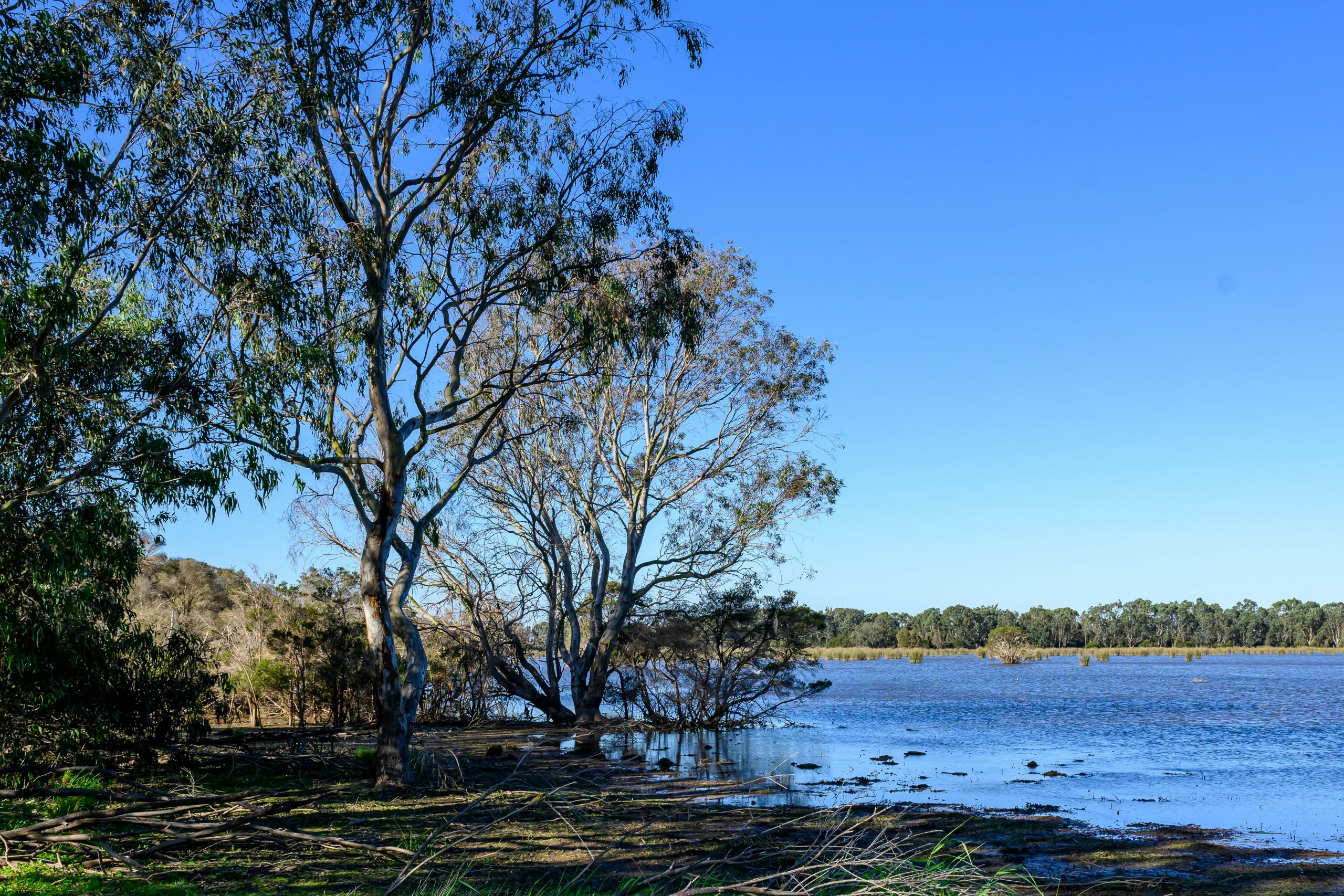
International environmental law is a body of public international law operating under treaty and non-treaty mechanisms to protect and conserve natural and human environments. It may seek to prevent harmful activities themselves or to address the harmful environmental effects of otherwise lawful activities. Its operation may be bilateral or multilateral, and its concern may extend to environments at the global, regional, or, at domestic level, within states. This broad scope is important because international environmental law provides legal frameworks through which long-term ecological concerns are given practical legal effect, for example, through obligations relating to conservation, cooperation, environmental assessment, monitoring, reporting, and sustainable use. The example of the Gippsland Lakes Ramsar Site shows how those duties can become difficult to apply when an international environmental treaty, such as the 1971 Ramsar Convention, must operate in relation to an ecosystem already substantially altered by human intervention and environmental change.
International environmental treaties are built to take account of long-term environmental or ecological perspectives. Treaty obligations are often enduring and exhibit a degree of stability. Ecosystems, however, are not static. This issue becomes significant when a treaty must be applied to ecosystems that are not stable, or even predominantly natural. This tension also matters in Australian law because treaties do not operate only in the international sphere. They provide national guidance, legal subject matter, and standards for decision-making under domestic law.
The Gippsland Lakes Ramsar Site in Victoria, Australia, usefully demonstrates application of principles of international law in a dynamic environmental context. It is highly relevant to Australia’s main national environmental law, the Environment Protection and Biodiversity Conservation Act 1999 (Cth) (EPBC Act), which incorporates international environmental obligations into Australian law. The Gippsland Lakes is listed as a wetland of international importance under the 1971 Ramsar Convention. The site is shaped by human interventions, including the permanent artificial opening to the sea, nutrient loading, upstream water diversions, pollution, and anthropogenic climate change. For that ecosystem, the legal question is not simply what the Ramsar Convention meant in 1971, but how the Convention should be construed today when applied to wetlands already living through major anthropogenic change.
Treaty Interpretation for Changing Environments
International environmental treaties are designed to endure while the ecological conditions to which they apply continue to change and responses to environmental problems evolve. For that reason, a rigid approach to interpretation of environmental treaties is inapt. Article 31 of the Vienna Convention on the Law of Treaties requires interpretation to proceed in good faith according to the ordinary meaning of treaty terms, as well as context and a treaty’s object and purpose. That exercise is not limited to the treaty text alone. It may include subsequent agreements and subsequent practice between the parties, as well as other relevant rules of international law applicable between them (art 31(3)(a)-(c)).
This matters in environmental law. It matters when environmental treaties are applied in domestic settings. How these treaties work in practice often depends on guidance, technical standards, and institutional decisions adopted after the treaty entered into force. In its Advisory Opinion on the obligations of states in respect of climate change, the International Court of Justice confirmed that environmental treaty interpretation must be undertaken considering the body of ‘directly relevant applicable law’ (para 114). In that Advisory Opinion, the Court affirmed that decisions of treaty bodies, such as Conferences of the Parties (CoPs), may carry legal weight, and that obligations can be clarified and developed through subsequent agreement and subsequent practice (para 184). Environmental treaties remain effective over time in part because of this interpretive flexibility, not despite it.
Ramsar as a Living Convention: Conservation, Wise Use, and Management
The Ramsar Convention is a strong example of this dynamic. The treaty text is relatively brief, but its operation over more than fifty years has depended heavily on decisions of CoPs and on shared state practice shaping how key terms are understood.
Article 3(1) of the Convention requires parties to promote the conservation of listed wetlands and, as far as possible, the wise use of wetlands in their territory. Those obligations are now understood through concepts that were not fully elaborated in the original text. One of the most important is ‘ecological character’. Ramsar Resolution IX.1 (CoP9) defines ‘wise use’ as the maintenance of ecological character, achieved through ecosystem approaches, within the context of sustainable development (Annex A, para 22). The same resolution treats ecological character at the time of listing as the baseline against which change is assessed (Annex A, paras (15)-(16)). This formulation draws directly on the ecosystem approach and sustainable use concepts developed under the Convention on Biological Diversity, exemplifying how the interpretation of Ramsar integrates concepts from other areas of international environmental law.
Ramsar functions through interpretive evolution, including CoP resolutions and state practice. The Convention itself gives the CoP an ongoing governance role, including the power to make recommendations on conservation, management, and wise use, and it requires parties to ensure that responsible authorities are informed of and consider those recommendations (art 6(2), (3)). In a treaty system that operates by consensus and technical elaboration, those resolutions are not decorative. At a minimum, they carry substantial interpretive weight. As Lavanya Rajamani has remarked in the climate context, treaty regimes may develop through institutional practice and decisions adopted after the original treaty text, even without formal amendment. In some cases, they might constitute subsequent agreement or evidence of subsequent practice within the meaning of article 31(3) of the Vienna Convention.
This applies to Ramsar’s management planning guidance. Resolution VIII.14 adopted detailed guidelines for management planning for Ramsar sites and strongly urged parties to apply them. Those guidelines emphasise catchment, coastal zone management, and the use of ecological zoning (paras [14]-[27], [53]-[65]). These are not secondary technical suggestions. They help to identify the best means to conserve a listed wetland.
Why the Gippsland Lakes matter
The Gippsland Lakes raises an interpretive question in environmental matters that is not abstract. By the time of listing, the site already suffered a profoundly altered ecological condition. It was not a pristine natural wetland anymore. It was, and remains, a complex system fundamentally affected by human impacts. Environmental conditions and pressures change. Ecological concepts change. Techniques for managing environmental issues develop. That makes legal interpretation harder, but also more important.
Change has clearly occurred. Many Ramsar-listed wetlands are already shaped by long-term human intervention, cumulative pressures, and ongoing ecological transformation. A rigid reading of the Convention risks limiting Ramsar to sites with stable ecological conditions. That does not reflect how international environmental law operates. Ramsar has developed by drawing on related frameworks, including the Convention on Biological Diversity and technical work such as the Millennium Ecosystem Assessment.
Seen this way, Ramsar is not limited to preserving pristine sites through dated ideas and techniques. It can also apply to wetlands that are dynamic, vulnerable, and already altered. The real difficulty is how obligations of conservation, wise use, and management planning apply when the ecological baseline is no longer fixed. That is where evolutive interpretation does real legal work. It allows the Convention to operate through later-developed concepts such as maintenance of ecological character, sustainable development, and integrated planning.
Meaning for Australian law
These interpretive frames do not remain at the level of international application alone. They matter for jurisdictions like Australia because Australian law incorporates the Ramsar Convention directly. Sections 333 and 334 of the EPBC Act, for example, require the Commonwealth to use its best endeavours, in cooperation with the states, to ensure that Ramsar site management plans are consistent with the Convention and to implement Ramsar management principles.
In Minister for the Environment v Greentree (No 2), Sackville J said that the EPBC Act must be construed against the background of the Ramsar Convention [118]. This is relevant in the context of s 333 of the EPBC Act, which gives domestic effect to the Convention as such while framing the Commonwealth’s obligations in terms of a qualified duty to use its best endeavours. The question is therefore not only what aspects of the Convention Australian law has adopted, but also how the content of those obligations is to be understood, particularly where the Convention has developed through subsequent CoP guidance and practice.
For the Gippsland Lakes, that has practical consequences. If the Commonwealth’s duty is to use its best endeavours to secure alignment with Ramsar, the content of that obligation should be informed by the Convention as it has developed through CoP guidance. This points to the need for active and technically engaged Commonwealth involvement in Ramsar site management and planning, rather than simply relying on a management plan prepared by relevant sub-national (Victorian) Government.
The 2024 Gippsland Lakes Ramsar Management Plan, prepared by Victoria, contains no reference to Ramsar’s 2002 management planning guidance. If that is right, what did the Commonwealth do to satisfy its own statutory duty? The claim that the plan was reviewed may not be enough. The Climate Advisory Opinion is helpful here by analogy. In discussing obligations of cooperation, the Court said that compliance with obligations of conduct is assessed against a standard of due diligence (para 218) and may require a state to use all means at its disposal to do so (para 229). That language is not directly about Ramsar, but it offers a relevant frame for understanding what serious Commonwealth engagement might require.
A living convention requires a living practice of implementation
The Ramsar Convention should not be treated as a fixed text operating in a changing ecological world. It is better understood as a living instrument, the content of which develops over time through subsequent agreement, subsequent practice, and interaction with related environmental norms. That is what allows the Convention to remain legally and practically meaningful.
Domestic implementation of Ramsar, and of environmental treaties more generally, must take this seriously. In wetlands such as the Gippsland Lakes, where anthropogenic change is deep, ongoing, and potentially accelerating, management planning must be rigorous, ecologically informed, and legally serious. The remaining question is whether the Commonwealth is prepared to give practical effect to the Convention as it has evolved through subsequent guidance and practice.
 Photo by Zoe Askew on Unsplash
Astrid Milena Bernal Rubio
Astrid Milena Bernal Rubio is a Colombian environmental lawyer and PhD candidate at Melbourne Law School. Her research examines emerging principles of the just energy transition in international law. She is a Fellow of the Melbourne Centre for Law and the Environment (MCLE) and a member of the Melbourne Climate Futures Academy. Her academic work and experience engages with international environmental law, Indigenous rights and international climate governance.
Bruce Lindsay
Dr Lindsay is a managing lawyer at Environmental Justice Australia, practicing in environmental law, water law, biodiversity and related fields. His practice is primarily in public interest environmental law, acting for community, nongovernmental and Traditional Owner clients, as well as engaging in public advocacy in policy and law reform. He has a long personal connection to the Gippsland Lakes and a general fascination with wetlands, rivers, waterways and our human relationships with them.



