
On this day forty years ago, States adopted two Additional Protocols to the 1949 Geneva Conventions, and in doing so, reaffirmed basic principles of international humanitarian law (IHL) and codified crucial principles and rules. Today, these contributions still stand at the front line of contemporary conflicts, protecting civilians from the worst excesses of war and guiding parties to armed conflict as they navigate new realities. But four decades after their adoption, the question still arises: are the Additional Protocols relevant in contemporary wars? The International Committee of the Red Cross (ICRC) answers this question with an emphatic ‘yes’. Working in close proximity to victims of armed conflict, we see that the Protocols save lives and reduce suffering on battlefields around the world every day.
In order to explain this view, we must consider not only the main features and achievements of the Protocols, but also their geopolitical context.
The negotiation of the Additional Protocols was influenced by the decolonisation conflicts and wars of national liberation that erupted throughout Africa and Asia in the decades following the Second World War. These conflicts were characterised by asymmetric warfare, where guerrilla fighters who faced organised armies heeded the advice of Mao Tse-tung that ‘a freedom fighter must be in the civilian population as a fish in water’. The spike in the number of non-international armed conflicts left civilians – as the main victims – largely beyond the protective scope of IHL (with the exception of common article 3 of the 1949 Geneva Conventions).
This period was also marked by new realities on the battlefield. The development of new weapon technologies, such as aerial weapons and rockets, threatened to extend the battlefield ad infinitum. Surveying the horrors of the Vietnam War in 1968, the ICRC considered that a turning point had been reached, with the Presidency Council warning that ‘the Geneva Conventions, in the present circumstances, are like an island in the middle of a swamp and will continue to sink slowly but surely if the Committee does not react’.
It was facing these challenges that States adopted the Additional Protocols in 1977.
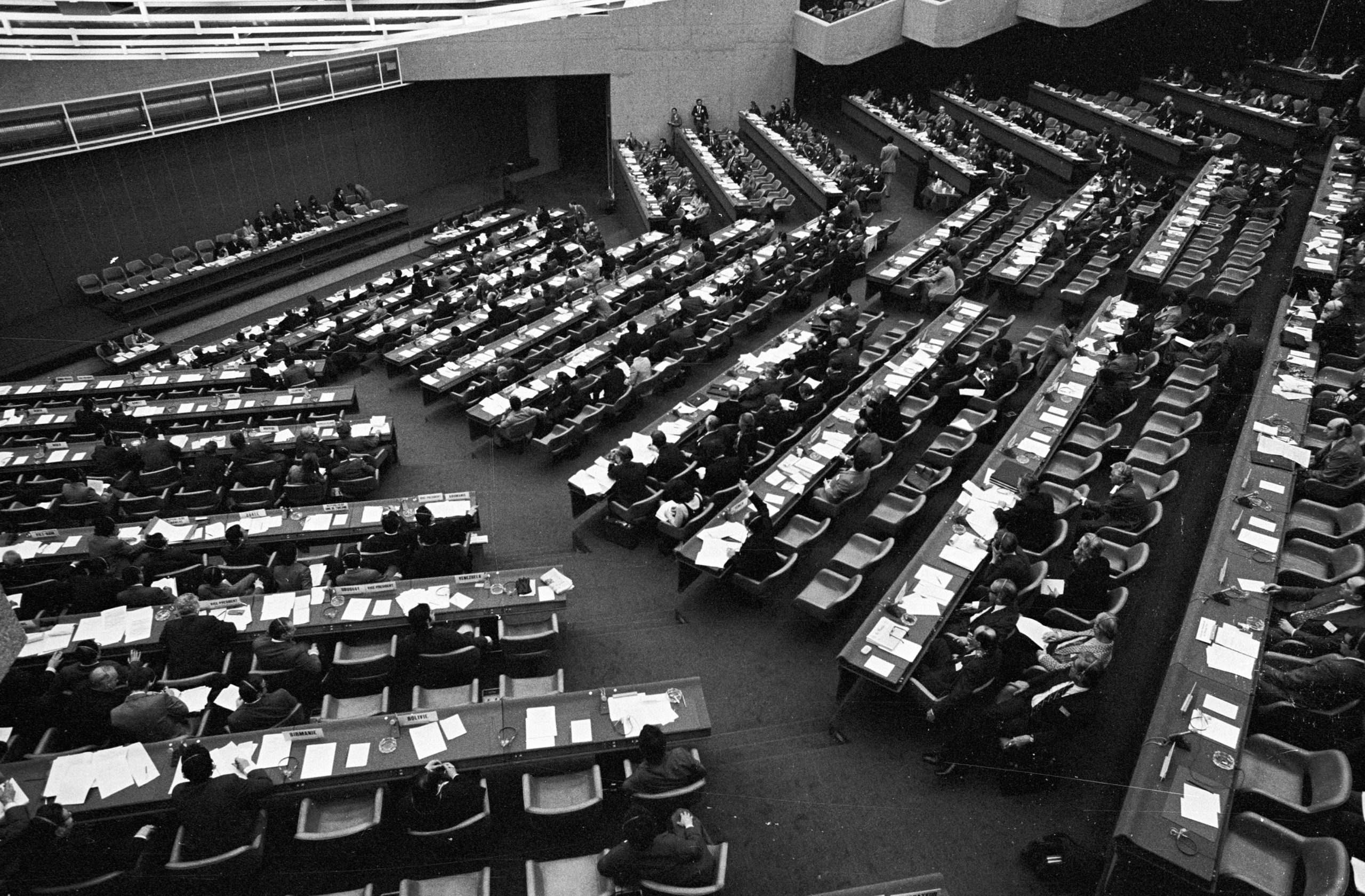
An important goal of the Diplomatic Conferences held between 1974 and 1977 was to reaffirm existing principles of IHL, which were already part of conventional and customary international law, but which had been negotiated before the era of decolonisation and the resultant trebling of the number of States. The universality of participation in the negotiation of the Protocols was unprecedented, with 124 States ultimately participating in the Diplomatic Conferences (compared with 59 in 1949). The concerns and priorities of newly independent States – including the classification of wars of independence, the treatment of guerrilla fighters, the legality of apartheid and the status of mercenaries – drove the negotiation agenda. These found expression in the Protocols while remaining true to a universally accepted humanitarian goal.
The Additional Protocols also aimed to codify and detail essential rules on the conduct of hostilities, on which agreement could not be reached in 1949 due to irreconcilable differences on nuclear weapons. These rules were overdue for a healthy dose of universal scrutiny and development, having been left without significant revision since 1907. Among the most important rules contained in the Protocols are those on the protection of the civilian population and objects against the effects of hostilities – all of which save lives on battlefields around the world every day. In a paradigmatic shift, Additional Protocol II became the first-ever treaty devoted exclusively to the protection of people affected by non-international armed conflicts, and expressly extended essential rules of IHL to these conflicts.
The Protocols – and the broad participation in their negotiation – also contributed to the formation of customary law, such as Rule 70 of the ICRC’s Customary IHL Study, which prohibits the use of weapons of a nature to cause superfluous injury or unnecessary suffering. Furthermore, the Protocols inspired the development of multiple weapons treaties. During the discussions at the 1974-1977 Diplomatic Conferences, delegates decided to convene a special conference under the UN framework. This conference
went on to elaborate what would ultimately become the 1980 Convention on Prohibitions or Restrictions on the Use of Certain Conventional Weapons, which prohibits several particularly cruel weapons or restricts their use. A range of other treaties have since been concluded to prescribe certain weapons, and there is no doubt that the adoption of the Additional Protocols contributed to these processes, which have reduced the pain and suffering of victims of war every year.
On a related note, the Protocols also made milestone contributions to international criminal law and the fight against impunity, by expanding the list of grave breaches of IHL in international armed conflict and setting the foundations for the extension of criminal responsibility for war crimes in internal conflicts, as evidenced by the Statutes and jurisprudence of the ad hoc international criminal tribunals in Rwanda and the former Yugoslavia.
But the real triumph of the Additional Protocols has been their ability to translate into practice. The last forty years have proven that: far from ivory tower idealism, they are battle-worn tools that make a tangible difference on the ground. The ICRC has been privileged to witness this impact, including recently in the peace negotiations in Colombia in 2016. These drew on Additional Protocol II’s recommendation to extend the ‘widest possible amnesty’ for persons who participated in the conflict (but in doing so did not incur liability for international crimes). In our own work in more than 80 countries, we rely on the provisions related to relief and medical actions. These underpin the support we offer to more than 50,000 weapon-wounded patients each year, as well as 148 emergency first-aid posts located near combat zones.
Any efforts to minimise the Additional Protocols as a touchstone in armed conflicts today – including in counter-terrorism operations – should therefore be dismissed as a tactic to move the goalposts and must be unmasked as an unwillingness to apply time-tested rules and principles to contemporary armed challenges. Our experience shows that the failure to impose limits on means and methods of warfare may prompt excesses in return, and contribute to a cycle of armed conflict that will spiral through generations.
The Additional Protocols were negotiated and agreed in the thick of Cold War polarisation, amid nuclear-level anxiety, and at a table where newly independent States sat facing their recent colonial powers. Despite the geopolitical landscape of the 1970s, States worked hard to clarify the principles of
IHL in practice. The Protocols are not relics of a bygone, simpler time in history – rather, they are carefully negotiated products of experience and hard-won compromise, based on the complexities of combat. On the fortieth anniversary of their adoption, they remain vital and must be implemented, applied and enforced.
About the author: Dr Helen Durham is the ICRC’s Director of International Law and Policy. She holds a PhD in the fields of IHL and international criminal law, and is a senior fellow at Melbourne Law School. She has been director of international law, strategy, planning and research at Australian Red Cross and has worked as ICRC head of office in Sydney and as legal adviser to the ICRC regional delegation in the Pacific. She has also completed a number of missions with the ICRC in Myanmar, Aceh and the Philippines.
 ICRC
ICRC


