
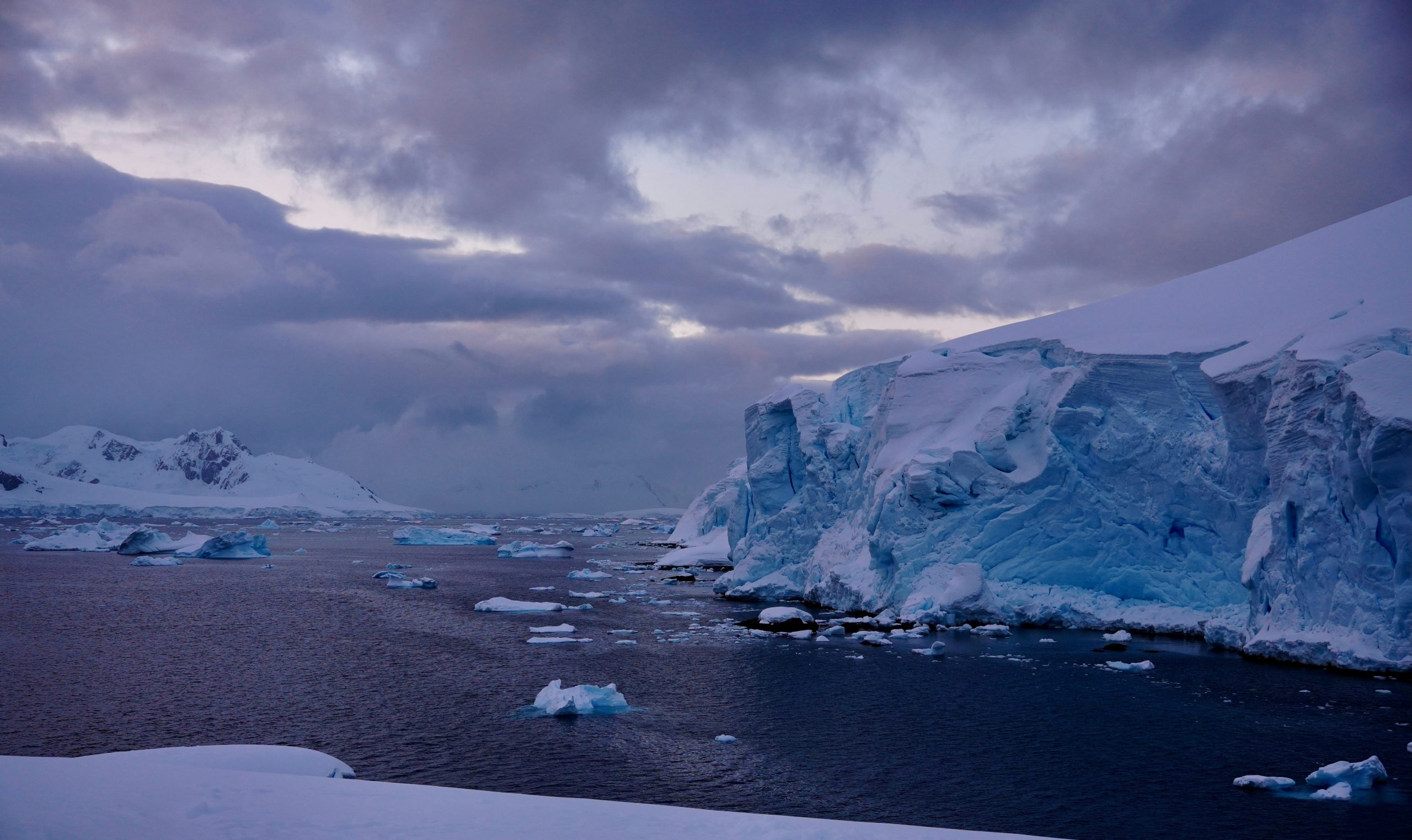
The Protocol on Environmental Protection to the Antarctic Treaty (also known as the Antarctic Environmental Protocol, or Madrid Protocol) was signed in Madrid, Spain, on 4 October 1991, and entered into force on 14 January 1998. Negotiated by the Antarctic Treaty Consultative Parties (ATCPs) and adopted as a ‘supplementary’ agreement to the to the 1959 Antarctic Treaty, the Protocol expands the coverage of the former by incorporating the protection of the Antarctic environment as one of its core considerations. Since this month marks the twenty-fifth anniversary of its conclusion, it seems appropriate to take this time to review its scope and reflect on some of its success.
As an international legal instrument, the Protocol is one of the most comprehensive multilateral agreements ever promulgated for the protection of the environment. Broad in purview and ambitious in nature, its central objective is the realisation of Antarctica as ‘a natural reserve, devoted to peace and science.’ Applying to the area south of 60⁰s latitude (the scope of which encompasses both the Antarctic continent and Southern Ocean), its States Parties commit themselves to ‘the comprehensive protection of the Antarctic environment and dependent and associated ecosystems.’
The fact the Protocol was adopted at all is testament to a remarkable show of maturity by the ATCPs. Finalised at a time when the question of whether Antarctic mining should be permitted was still politically live – as evidenced by the 1988 conclusion of the Convention on the Regulation of Antarctic Mineral Resource Activities, the ability of the States to cast aside the minerals regime they had spent so long negotiating and adopt a binding instrument that conversely provides for the comprehensive protection of the Antarctic environment is telling.
At the heart of the Protocol is recognition that the Antarctic environment is something worth protecting. In this context, Article 7 fronts as arguably its most important and emblematic provision. Focused on the protection of Antarctic minerals, the Protocol declares, ‘[a]ny activity relating to mineral resources, other than scientific research, shall be prohibited.’ Though questions exist as to the exact scope of the prohibition, it is certain that according to the Protocol all commercial mineral resource activities in the Antarctic are banned. With regard to its other provisions, Parties are obliged to not only limit their adverse environment impacts but also take into account wilderness and aesthetic values in the planning and conduct of all regional activities. The performance of an Environmental Impact Assessment (EIA) prior to the commencement of all acts is also made mandatory. On pollution and waste management, Parties are required to both limit and remove all waste that is generated and clean up any that has been left behind by their prior conduct. Provisions on the conservation of Antarctic indigenous flora and fauna are also set out. Functioning to update the 1964 Agreed Measures, these protections include the imposition of limitations on human interference with indigenous flora and fauna, and a ban on the importation of all non-native species. Where appropriate, the means for the designation of areas or species as ‘protected’ – and therefore subject to even higher environmental standards, are also introduced. Consistent with the wider aims of the Antarctic Treaty, the general freedom of scientific research in the Antarctic is expressly affirmed. Even so, in certain specific circumstances this freedom may be curtailed for the sake of environmental protection. Compliance is addressed by way of dovetailing on the back of the Treaty’s already established system of decentralised mutual inspections.
The Protocol is clearly a complex instrument. As such, to assist with its implementation, provision is made for the establishment of the Committee for Environmental Protection (CEP). Charged to monitor, provide advice, and formulate recommendations for consideration by the ATCPs at the Antarctic Treaty Consultative Meeting (ATCM), the CEP is more specifically designed to aid the Protocol’s development from textual instrument to functional environmental regime.
Moving now to the modern day, it is undeniable that the Protocol has been a success. In the main, its central objective of the comprehensive protection of the Antarctic environment has been well met.
Further, by way of its successful implementation, its grounding in Antarctic law and as a prominent instrument in the context of international environmental law is now equally affirmed.
Since its entry into force in 1998 the membership of the Protocol has increased from 28 to 37 States. Though this figure may be viewed as modest, more important is the fact that of the States recognised as ‘active’ in the Antarctic all have provided consent to be bound. Not only has this lent the Protocol substantial normative weight, but also aided the emergence of an expectation that States must first become Parties to be actively involved in Antarctic activities.
With regards to the regime, the Protocol is now in full operation barring certain persistent issues with respect to liability coverage. The CEP has quickly taken to its task and now constitutes arguably the most effective organ of the entire Antarctic Treaty System. Further – by way of its assistance, the ATCM has also been proactive and has now adopted the full suite of procedural processes required for the Protocol’s implementation. The adherence of States to the terms of the Protocol has been good.
Although breaches have occurred, these have been both limited and, when identified, generally fixed. The EIA procedures have been well taken up and respected. A considerable number of waste remediation activities have also been undertaken reducing the risk of future unintended contamination. The minerals prohibition has also found universal respect. Interestingly, over the years, the prohibition has found substantial support from the international community – including by way of a United Nations General Assembly Resolution. In this context, bearing in mind the fact no commercial mineral activities have occurred to date, the possibility that the prohibition now constitutes an emerging rule of customary international law is one that should be considered. In terms of area management, 78 areas are now designated as ‘specially protected’ or ‘specially managed’ and accordingly subject to even more stringent environmental standards. Lastly, although beset with logistical issues, the system of mutual inspections has also functioned well. Having said this, much of the heavy lifting has undertaken by a select number of States resulting in calls for greater collective engagement.
Much of what has been presented paints a rosy picture. Indeed, this is the intended takeaway. At the same time, it would be disingenuous to suggest the future of the Protocol is guaranteed. Over the horizon a number of challenges are beginning to coalesce. Though not portents of doom, they at least need to be noted. In this context, the way Antarctic tourism is dealt with in coming years will be one of considerable interest. Likewise, the matters of regional bioprospecting and climate change are also coming to the fore. The minerals issue too is one that has never really gone away. For some, the Antarctic is subject to an obvious el Dorado complex. That said, questions of interaction rightfully exist between the Protocol and Part XI of the 1982 United Nations Convention on the Law of the Sea in the Southern Ocean.
Finally, the commitment of certain States to the spirit of the Protocol warrants remark. Although it would be remiss to overplay the point too much, the 2014 announcement of the Russia Federation that it had mandated its research agencies to undertake hydrocarbon prospecting activities in the Antarctic should be viewed with concern. At the same time, Russia has since confirmed it respects the minerals prohibition.
To conclude, it is rare for a single instrument to so radically alter the future direction of a region. When reflecting on its twenty-five years, it is safe to say the Protocol has exceeded all expectations. The results here speak for themselves. More can always be done – but as a starting point for the continuing protection of the Antarctic environment the Protocol provides a very firm foundational base. Predicting the future is commonly a fools’ game, but if the present positive political will can be maintained there appears no reason the Protocol will not be around to celebrate its fiftieth anniversary in 2041.
Scott Joblin is a PhD Candidate with the ANU College of Law. His research focuses on Antarctic environmental protection and the legal status of the hydrocarbons of the Southern Ocean Area. He is a member of the ANZSIL Oceans and International Environmental Law Interest Group. He holds a Master of Diplomacy and a Master of Strategic Affairs from the ANU and is a prior recipient of the Freyberg Scholarship. Outside of academia, his work experience includes roles in both the New Zealand House of Representatives and the NSW Government.
 Photo by


