
This Perspective was developed, following the negotiation of the 2024 updated WHO International Health Regulations, with the kind agreement of the publisher, based on the earlier piece Caroline E Foster, ‘Disease Outbreak Disclosure and Trade in Goods: A Specific Instances Inquiry Mechanism?’ published in (2020) 18 New Zealand Yearbook of International Law 3-25.
This ANZSIL Perspective enquires into whether the recently updated WHO International Health Regulations pay sufficient attention to the disincentives for countries to declare disease outbreaks. The World Health Organisation (WHO) Director-General’s declaration of mpox as a Public Health Emergency of International Concern (PHEIC) under the International Health Regulations (2005) announced on 14 August 2024 reminds us how important it is to ensure that these disincentives are not so great as to dissuade the notification of public health events that should be reported to the WHO.
The economic costs of reporting disease outbreaks are a notorious problem (Benvenisti 2020; Worsnop 2019). According to the Review Committee convened by the WHO Director-General to review the Regulations’ functioning during the COVID-19 response, the most important factor limiting compliance with the International Health Regulations 2005 (IHR) was the inherent tension between the IHR’s aim of protecting health and the need to protect economies by avoiding travel and trade restrictions (Report of the Review Committee on the Functioning of the International Health Regulations (2005) during the COVID-19 Response). However it remains up to States individually to decide on the extent to which they keep their borders open for the movement of goods and persons from territories affected by disease outbreaks (Foster, EJILtalk!, 2020). This is a matter of sovereignty (Art 3(4) IHR; Chung-fa Lo, 2010). The IHR respect and provide for States Parties’ rights to take “additional measures” over and above WHO recommendations, in pursuit of public health risk protection. States Parties may rely on the precautionary principle, and in dealing with a new pathogen this is particularly important. In doing so they must comply with IHR Article 43.
Little increased accountability for unwarranted import bans in the updated IHR of 1 June 2024
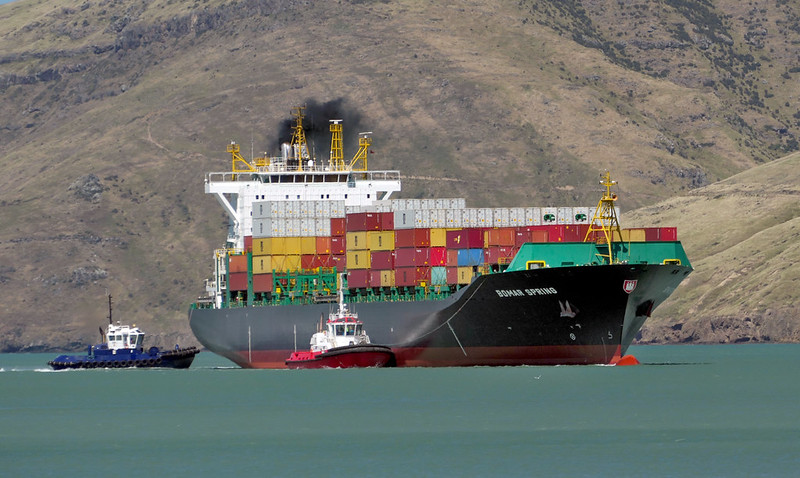
The fear that disclosure may lead to excessive trade bans remains a reasonable concern for exporting countries, and a real concern for pandemic prevention. Events during the COVID-19 pandemic illustrate the potential for bans on movement of goods, which is the focus of this contribution. In July 2020 the WHO advised that the SARS-CoV-2 virus was potentially carried by fomite, i.e. contaminated objects and materials (WHO, 2020). Australian research published in October 2020 then demonstrated that the pathogen could survive on smooth surfaces at low temperatures in the dark for longer than expected (CSIRO, 2020). The following month, China began claiming to have found the virus on frozen beef, port and fish imports from around 20 trade partners. Such claims are of potentially serious concern for exporting countries, especially exporters of primary products for human consumption. Yet in the updated International Health Regulations adopted on 1 June 2024 there is little in the way of new accountability for unwarranted import bans.
The fairness of expecting full disease outbreak disclosure
The experience above is particular to COVID-19, but the history of concern about the economic impact of major trade bans makes clear the size of the problem (Aginam, 2004), which is magnified by the potential for copy-cat conduct in a time of crisis (Worsnop, 2019). The EC response to the 1991 cholera outbreak in Peru, together with neighbouring countries’ restrictions, is said to have cost Peru over US$770 million in trade losses that year, even though trade measures were adopted contrary to clear statements that there was no basis for restrictions on travel or trade issued by the WHO and the United States Centers for Disease Control (von Tigerstrom, 2005). A similar pattern was seen in the EU response to cholera in East Africa in 1998 (Fidler, 1999). Following the 2016–2017 cholera outbreak in Yemen trade appears to have been severely affected and public health scholars continued to articulate the concern that “The fear of economic sanctions … that could lead to loss of trade, and travel restrictions that could impact tourism are major barriers to accurate reporting of cholera by countries” (Ganesan, Sengupta and Legros, 2020). Scholars have questioned the fairness of expecting full disease outbreak disclosure while leaving reporting countries’ economies exposed (von Tigerstrom, 2005). Further, ensuring international trade flows may be all the more important when countries are in need of financial resources in order to deal with the economic impacts of an epidemic.
The updated IHR still offer only “consultations” between affected parties
How then do the updated IHR measure up? The relevant amendments are in Article 43(7). They are relatively minor. Prior to the 2024 update, Article 43(4) already left it open to the WHO, after assessing the relevant information, to request that a State Party reconsider the application of additional measures. Very occasionally, the WHO has made such an Article 43(4) request. In the case of the 2018 Nipah Virus outbreak in India WHO interaction with five States banning products from Kerala led to two of these States lifting their bans (Burci and Negri, 2021). Article 43(7) further already allowed that a State Party impacted by an additional measure might request “consultations” with the implementing State Party to clarify the scientific information and public health rationale underlying the measure and find a mutually acceptable solution. The 2024 IHR update has added explicit provision for these “consultations” to take place either directly or through the WHO Director General, who may facilitate consultations between the States Parties concerned. Information shared during the consultation must be kept confidential unless otherwise agreed. This is rather a small advance in terms of identifying mechanisms for accountability in respect of unwarranted trade bans. There would in practice be a range of further options available, and it was open to the IHR negotiators to consider including them.
The option of inquiry
What more might have been included in the updated IHR? Provision for the well-established international legal process of inquiry (de Brabandere, 2022) in such cases might have been an option (Foster, 2020). Compulsory arbitration has also been suggested as a back-up for unresolved complaints (Wedong and Lin, 2021). An inquiry, triggered by a complaining party and carried out by a small neutral third-party body, could be tailored around the task of openly establishing the particular facts of a given situation of import restriction. Reviews on the handling of past epidemics have emphasised the need for measures affecting international travel and trade to be evidence-based (Report of the Review Committee on the Functioning of the International Health Regulations (2005) in relation to Pandemic (H1N1) 2009; Lancet Independent Panel on the Global Response to Ebola, 2015), referring in this context to the results of risk assessments, public health indicators, scientific evaluations of measures, sectors consulted, and measures’ integration in national response strategies (Report of the Review Committee on the Functioning of the International Health Regulations (2005) during the COVID-19 Response). Appropriately appointed members of an inquiry panel could create a dossier collating the relevant information applicable to the situation in question, together with information about the trade barriers.
Depending on the circumstances, and the importance of protecting the economic interests at stake, an inquiry could be launched ahead of, in place of, or subsequent to Article 43(7) consultations. The outcomes of an inquiry would not be legally binding: the rationale of inquiry as an international process is usually to generate a factual record. Staff at the World Trade Organisation (WTO) could assist an inquiry, drawing on extensive prior experience in the running of disputes under the WTO Agreement on Sanitary and Phytosanitary Measures (SPS), with which the IHR 2005 were drafted to be compatible. There is also potential for the results of an inquiry to feed into employment of the good offices of the WTO SPS Committee chair (Art 12.2, SPS Agreement; 1995 Working Procedures of the SPS Committee; Committee’s Decision of 8 September 2014). Like WTO panels’ consultation of scientific experts and international organisations, IHR inquiries would be structured to promote trust in the outcome (Foster, 2023). An inquiry could potentially be followed ultimately with a determination of the legality of trade barriers under IHR Article 56 or through the usual WTO or other trade dispute settlement procedures.
Transparency and a “sunshine” approach
Provision for inquiry would be valuable even if inquiries were seldom held in practice, because of the reassurance that the availability of this process could help generate, enabling countries to report outbreaks with lessened concern for the consequences. When and if there were inquiries, the immediate consequences of any findings would lie primarily only in the political pressure generated towards the lifting or modification of restrictions. The emphasis would ideally be on the rebuilding of States’ relationships. It could be that a State that maintained import restrictions might find it appropriate to offer ex gratia trade concessions to help restore the balance in States’ economic and political relations. Alternatively there is the possibility of establishing a fund to cross-subsidize countries affected by disease-related trade bans, with affected States to have the first call on such a fund (Worsnop, 2019; Flood and Williams, 2004; Aginam, 2005).
Rather than the “naming or shaming” advocated in the past (Benvenisti, 2020), such an accountability mechanism for trade-restricting pandemic response measures would be aimed first and foremost at increased transparency, consistent with the “sunshine” approach recommended in the literature on compliance with multilateral environmental agreements (Brown Weiss and Jacobson, 1998). Meantime the WHO continues to keep records of States’ Article 43 measures and generate aggregate annual statistics. Registers of trade restrictions are also kept in the WTO, like that maintained in the COVID-19 pandemic which recorded measures impacting on trade including export restraints on goods such as personal protection equipment.
Why are the advances in the IHR minimal?
Why then are the advances in the IHR so minimal? This may be because for leading agricultural exporting States an accountability mechanism is still a double-edged sword. They need to protect their export access in other countries but they may not want to face formal challenges if they need legitimately to close their own borders, including to protect against phytosanitary risks. Nevertheless it is objectively the case that establishing greater accountability around the potential for unwarranted trade bans would help with timely disease outbreak notification, and in this way protect the global economy as well as global population health. Concerns around the economic disincentives to disease outbreak notification are real. Empirical research has shown, even controlling for surveillance capacity, longer reporting lags in the States who are particularly vulnerable to being the target of others’ trade and travel barriers (Worsnop, 2019).
Greater accountability for import bans would complement the updated IHR’s new provision in Article 18 (3) for WHO recommendations to States Parties to take into account the need to facilitate international travel and also to maintain international supply chains. It would also complement the emphasis on equity and solidarity in the updated IHR and the incentives afforded for timely notification consistent with the Panel for Pandemic Preparedness and Response (IPPR)’s emphasis on the importance of incentivising disease outbreak disclosure (“Make it the Last Pandemic”, 2021). This emphasis on equity is expected to carry through also into the Pandemic Treaty presently under negotiation, together with provisions targeted at increased upstream prevention (Proposal for a Pandemic Agreement, 2024).

Caroline E Foster
Professor Caroline E Foster is with the Faculty of Law, University of Auckland, New Zealand, where she teaches public international law, global environmental law and international dispute settlement. Caroline is presently Director of the New Zealand Centre for Environmental Law (NZCEL). Her publications include: Caroline E. Foster, Science and the Precautionary Principle in International Courts and Tribunals: Expert Evidence, Burden of Proof and Finality (Cambridge University Press, 2011); Caroline E. Foster, Global Regulatory Standards in Environmental and Health Disputes: Regulatory Coherence, Due Regard and Due Diligence (Oxford University Press, 2021); and more recently Foster, C.E. and Voigt C. (Eds) International Courts versus Non-Compliance Mechanisms: Comparative Advantages in Strengthening Treaty Implementation (Cambridge University Press, forthcoming, 2023).



