
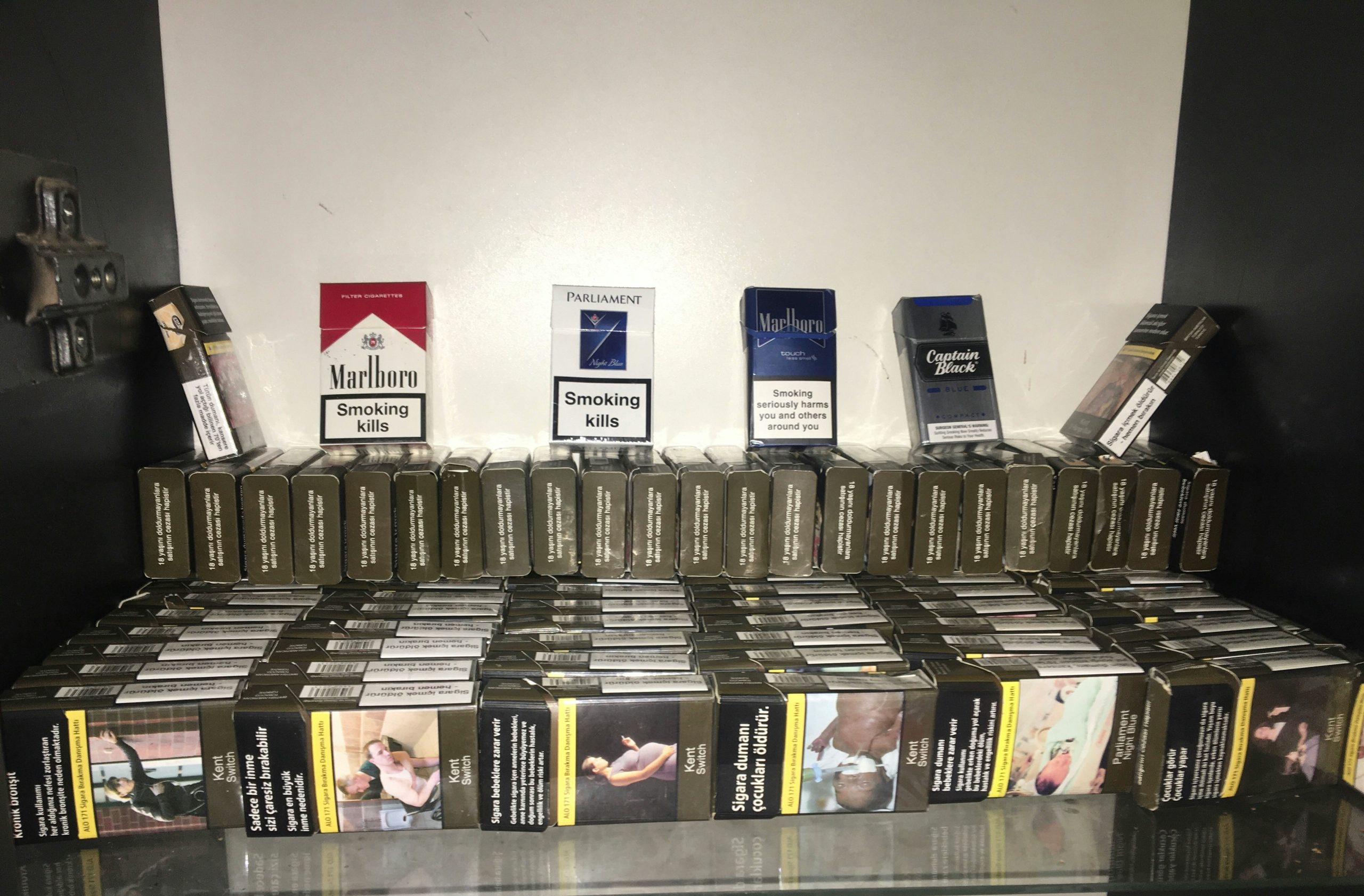
On 17 December 2015, the Tribunal constituted in Philip Morris Asia Limited (Hong Kong) v. The Commonwealth of Australia issued a unanimous decision agreeing with the Australian Government’s position that it did not have jurisdiction to hear Philip Morris Asia Ltd’s claims in this matter. This brought to an end a legal battle under the 1993 Australia-Hong Kong Bilateral Investment Treaty (the BIT) over Australia’s world-first tobacco plain packaging legislation.
On 21 November 2011, the Australian Parliament enacted legislation that prohibits the use of logos, brand imagery, and promotional text on tobacco products and packaging, and includes restrictions on colour, size, format and materials of packaging, as well as the appearance of brand and variant names. In light of the tobacco industry’s increasing use of tobacco packaging to communicate marketing and brand messages, the legislation aims to reduce the appeal of tobacco products to consumers, to increase the effectiveness of health warnings, and to reduce the ability of retail packaging of tobacco products to mislead consumers about the harmful effects of using tobacco products.
On the same day that the legislation was enacted, the Hong Kong parent company of Philip Morris’ Australian operations – Philip Morris Asia Ltd (PMA) – issued a Notice of Arbitration against Australia, challenging the legislation pursuant to the BIT.). The Notice of Arbitration (which followed PMA’s Notice of Claim dated 22 June 2011) claimed that the enactment of the legislation violated Article 2 of the BIT, specifically the “fair and equitable treatment”, “full protection and security” and “unreasonable impairment” standards, and Article 6 of the BIT relating to expropriation without compensation. As relief, PMA sought suspension of the enforcement of the legislation, or alternatively, US$4.16 billion in damages.
The arbitration was conducted pursuant to the UNCITRAL Arbitration Rules, which allow for an arbitration to be bifurcated into two phases – the first to hear preliminary objections as to jurisdiction, the second (if necessary) to hear the merits of the matter. In an April 2014 procedural order, the Tribunal granted Australia’s application to bifurcate the proceedings.
Both jurisdictional objections argued by Australia during the bifurcation phase, on “non-admission of investment” and “temporal” grounds, arose from the fact that Philip Morris’ Australian operations were owned by a Swiss company (Philip Morris Brands Sàrl) prior to their transfer to PMA in February 2011. Australia does not have any treaty obligations with Switzerland which would give Swiss investors rights to bring Investor-State Dispute Settlement (ISDS) proceedings against Australia.
In its “non-admission of investment” objection, Australia argued that material omissions in PMA’s foreign investment approval application – particularly its failure to disclose the true underlying reason for the restructure (which triggered ISDS jurisdiction) – meant that PMA’s investment in the Australian operations had not been admitted in accordance with Australia’s laws and investment policies, as required by Article 10 of the BIT. In its unanimous decision of 17 December 2015 the Tribunal accepted the Foreign Investment Review Board (FIRB) approval letter as prime facie evidence that the investment was validly admitted for the purposes of the treaty, and that an examination of FIRB practices supported PMA’s factual argument that its FIRB application complied with Australia’s foreign investment laws and policies.
The “temporal” objection had two limbs. Under the first limb (ratione temporis) Australia argued that Article 10 of the BIT, which governs ISDS jurisdiction, does not apply to disputes already in existence prior to the putative coverage of an investment by the BIT. Australia pointed to the vociferous and long-standing opposition of the tobacco industry – including Philip Morris – to the tobacco plain packaging policy in arguing that the dispute arose as early as April 2010 (when the Australian Government first announced its decision to introduce tobacco plain packaging legislation), and certainly by the time of the FIRB investment approval in February 2011. However, the Tribunal found that – as a matter of fact – the dispute had not crystallised until the legislation was passed in November 2011.
Under the second limb of the “temporal” objection, Australia argued that at the time of the corporate restructure transferring ownership of the Australian operations to PMA, a dispute regarding the enactment of tobacco plain packaging legislation was reasonably foreseeable, making initiation of the arbitration by PMA an abuse of right. Australia argued that the driving purpose of that corporate restructure was invocation of jurisdiction under the BIT, and that PMA’s other purported commercial rationales for the restructure were unsubstantiated. Despite deciding that the threshold for finding an abusive initiation of an investment is “high”, the Tribunal accepted that threshold had been met in this case. In particular, the Tribunal not only found that the dispute was reasonably foreseeable at the time of the corporate restructure in February 2011 (adopting a less stringent standard than the “very high probability” test adopted in the ICSID case Pac Rim v El Salvador), but went further to find that the specific dispute had actually been foreseen by PMA at the time of the corporate restructure. The Tribunal rejected PMA’s explanation that the restructure was driven by global corporate restructure strategies, concluding [at 587]: “The record indeed shows that the principal, if not sole, purpose of the restructuring was to gain protection under the Treaty in respect of the very measures that form the subject matter of this arbitration.”
This finding of abuse of right led the Tribunal to conclude [at 585-588] that all of the claims raised in the arbitration were inadmissible, and that the Tribunal could not exercise jurisdiction over the dispute.
PMA also advanced an over-arching argument that it had exercised management control over the Australian operations since as early as 2001, and well before the Australian Government’s decision in April 2010 to introduce tobacco plain packaging legislation. Had this argument succeeded, PMA’s investments in Australia would have been covered by the BIT since before the April 2010 announcement of the Government’s decision, and all of Australia’s jurisdictional objections would have failed. However, the Tribunal found that PMA’s factual case had not satisfied the lowest conceivable standard of it having exercised management control “of at least some significance” in relation to the Australian operations.
Thus, Australia’s first experience as a Respondent State in ISDS ended with both a legal victory and a significant victory for public health. Since Australia’s adoption of tobacco plain packaging, numerous other jurisdictions – including New Zealand – have announced tobacco plain packaging laws. The United Kingdom laws recently survived a domestic judicial review mounted by the tobacco industry, and the European Court of Justice recently ruled in favour of the validity of the EU Directive on Tobacco Products (which permits EU Member States to introduce standardisation of tobacco packaging). It is also worth noting that Article 29.5 of the recently-concluded Trans Pacific Partnership includes a mechanism to exclude tobacco control measures from ISDS challenge.
Philip Morris Brands Sàrl (Switzerland) recently failed in an ISDS arbitration that was brought under the Switzerland-Uruguay Bilateral Investment Treaty and which challenged aspects of Uruguay’s tobacco control policies. However, the tobacco industry’s strategy of using international dispute resolution mechanisms to challenge tobacco control legislation is ongoing and likely to continue. In particular, Australia’s tobacco plain packaging laws remain under challenge before the WTO Dispute Settlement Body in complaints brought by Honduras, Dominican Republic, Cuba and Indonesia (a complaint by Ukraine has now lapsed), with a final report by the WTO dispute settlement panel not expected before the end of 2016.
About the author: John Atwood is Principal Legal Officer in the Office of International Law (OIL), Attorney-General’s Department, working in the Trade and Investment and Economic Law Practice Groups. He led the Tobacco Litigation Taskforce established within OIL to defend Australia in the Arbitration. Prior to these roles he worked in senior legal positions in a number of international organisations. Any views expressed in this article are the author’s own and do not necessarily represent the views of the Australian Government.
 Photo by


