
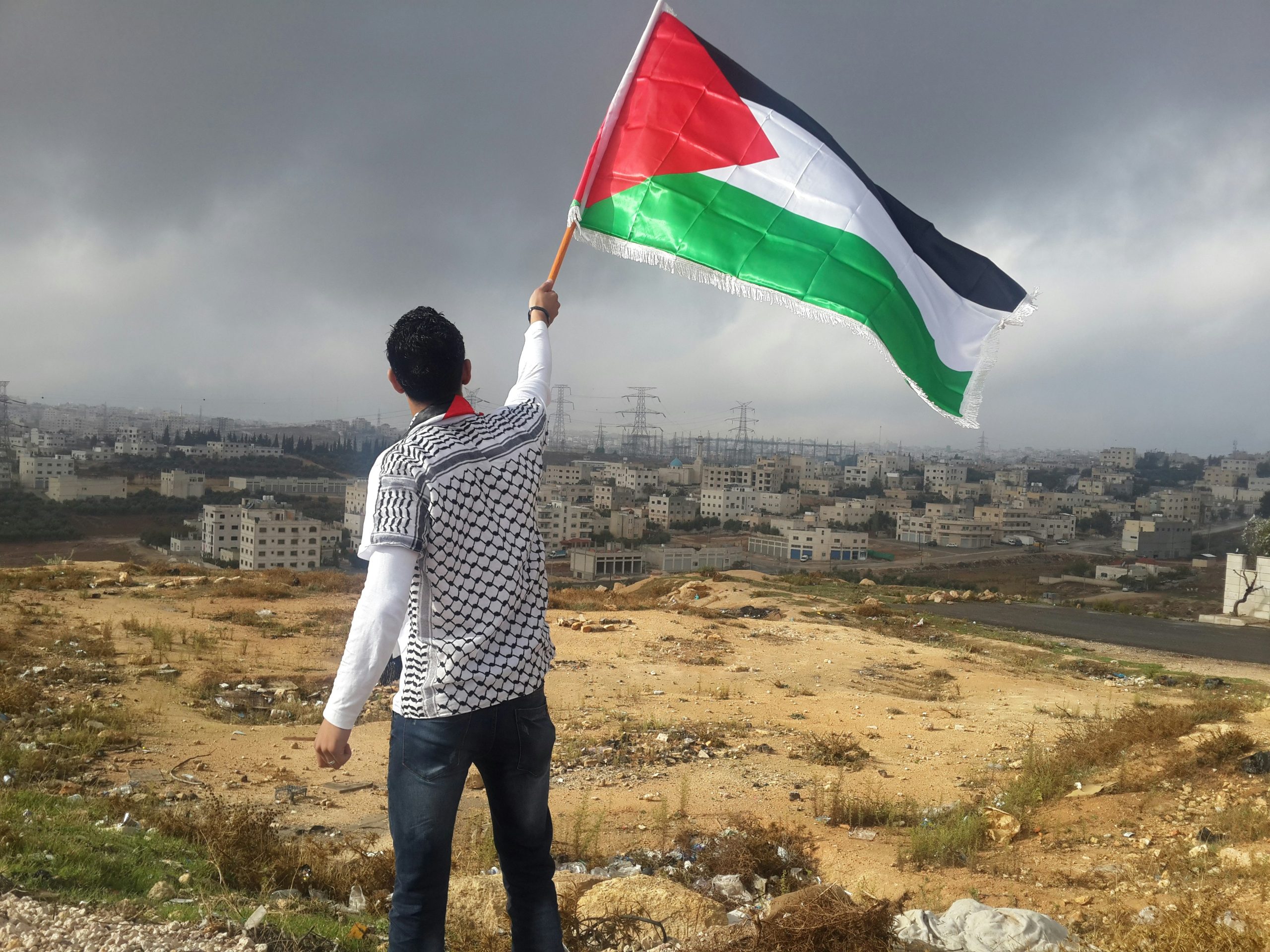
While there has been a steady increase in the number of States according formal recognition to Palestine in recent years, a significant momentum shift occurred over 2024-2025. From an international law perspective, the immediate catalyst was the 7 October 2023 attacks on Israel by Hamas emanating from Gaza. The intensity of Israel’s immediate military response prompted South Africa to commence proceedings against Israel in the International Court of Justice (ICJ) only 11 weeks later arguing that it was committing acts of genocide on Palestinians in Gaza. Three separate but linked requests for Provisional Measures by South Africa – endorsed by the ICJ in various orders in January, March and May 2024 – squarely placed the spotlight on Israel’s conduct and the future of Palestine. The United Nations (UN) General Assembly debate on 10 May 2024 regarding the admission of Palestine as a UN member state gave particular focus to which UN members recognised Palestine, and those that did not. Throughout 2024, intense debates took place in Australia and New Zealand over the war in Gaza and the position Canberra and Wellington took on Palestinian recognition. Those debates intensified throughout 2025, especially as a result of the joint initiative of France and Saudi Arabia, and Australia and New Zealand were increasingly seen as part of a small group of like-minded Western States whose decisions on recognition could prove to be pivotal. However, no Trans-Tasman consensus emerged on this issue which increasingly became one of yes, no or maybe.
Australia
The Albanese government was elected in 2022 with recognition of Palestine as part of the Australian Labor Party’s platform, which also expressed continuing support for a ‘Two-State Solution’. It therefore came as no surprise that the new Australian government was very supportive of the eventual recognition of Palestine though there was no clear timetable for that to occur. Nevertheless, Foreign Minister Penny Wong in 2024 identified certain criteria that would need to be met, and over the course of a year both the Prime Minister and Foreign Minister spoke positively of Australia moving towards Palestinian recognition. This position was formalised in Canberra on 11 August 2025, with actual recognition occurring along with Canada and the United Kingdom in New York on 21 September. Initially, Australia suggested recognition would only occur if the following conditions were met: that Hamas disarm; that the Palestinian Authority hold elections; that Hamas have no role in a future Palestinian State; and that the Palestinian Authority undertake certain reforms. None of those conditions outlined on 11 August had been met by 21 September, and it remains unclear as to whether ultimately Australia’s recognition of Palestine was conditional or whether it remains under review. For example, how would Australia respond if the Palestinian Authority is unable to hold elections? There is no current election timetable in Palestine and despite the Gaza ceasefire coming into force on 13 October, it is difficult to envisage free and fair elections being held in the foreseeable future.
One distinctive aspect of Australia’s position is that the Liberal/National Party coalition Opposition indicated they would withdraw recognition if elected. While committed to the ‘Two State Solution’, the Opposition are of the view that Australia’s September 2025 recognition was premature and point to the absence of settled Palestinian boundaries and lack of a legitimate government. Following their loss at the May 2025 Federal election and the current composition of the House of Representatives, the chances of the Opposition forming government at the time of the next election in 2028 would appear remote. Nevertheless, it would be remarkable if a key plank of the Opposition’s 2028 election platform was to withdraw Australian recognition of Palestine, and for that to possibly occur. While Australian recognition of newly emerged States, such as Kosovo and Macedonia, has from time to time been politically contentious, there has never been a time in recent history when such an issue has featured prominently in a federal election.
New Zealand
On 27 September 2025, the New Zealand Minister of Foreign Affairs and Trade, Winston Peters, formally announced at the UN General Assembly debate in New York that New Zealand was ‘not ready’ to recognise Palestinian statehood. It had been an increasingly contentious issue for months and many commentators, including former political leaders from all stripes, criticised the decision, saying that it was placing New Zealand on the ‘wrong side of history’.
In his UN speech, Mr Peters repeated the justifications for the non-recognition that had been long made at home. These can be boiled down to a few key points: that recognition would reward Hamas which would be politically and morally unacceptable; that there is no state to recognise (alluding to the traditional criteria of effective control of a settled population and defined territory as set out in the Montevideo Convention); and that recognition would only constitute a symbolic (and by implication, pointless) gesture. The Minister also repeated the mantra that New Zealand has long supported a ‘Two-State Solution’, and that New Zealand’s recognition of Palestine is a question of ‘when, not if’. These last points have been the position of New Zealand for several decades, including by previous iterations of the National government – currently the majority party of the ruling three-party coalition.
In the weeks leading up to the announcement, it had become clear that there were considerable differences in views between the three coalition partners as the matter was being debated in Cabinet. It is widely understood that a key difficulty lay in the opposition of the ACT Party (a minor party in the coalition) and, in particular, its leader David Seymour. Not known for his observance of diplomatic niceties, Mr Seymour stated ‘Yeah …not going to recognise a state that’s currently weaponizing hostages, holding people for years on end, and in absolutely inhumane conditions. I mean, who would recognise that?’ New Zealand First – the other minor coalition party – led by Mr Peters – has a better grasp of diplomacy but indications are that it seems to hold the same view. Richard Shaw and Chris Eichbaum have pointed out that the relevant Cabinet paper was drafted by the Office of the Minister of Foreign Affairs (that is, Peters himself) rather than the more usual – and less partisan – Ministry of Foreign Affairs. We can surmise that the firmly held positions by its minor partners left the National Party – supposedly the majority party of the coalition – with little space to make its own determination on Palestine without risking the coalition itself. Left to front the media at home, Prime Minister Luxon opined simply that New Zealanders should be proud because the stance of non-recognition was consistent with New Zealand’s tradition of independent foreign policy.
The three coalition leaders have in common that they dismiss or downplay the recognition debate as being simply a distraction – a mere gesture. Undoubtedly, a statement of recognition can only be a gesture, and it will not, by itself, bring about peace. But if recognition does not matter at all, how are we to understand the way in which the Israeli Ambassador praised the government’s non-recognition position?
Another commonality between the leaders is to point to the ‘not yet’ aspect of New Zealand’s position. It is not that New Zealand will never recognise Palestinian statehood, they say, it is only that the time is not yet right to do so. This is an attempt to downplay the significance of Mr Peters’ announcement at the UN. It is absolutely correct that it is open to New Zealand to recognise Palestine at any time in the future. Indeed, historically, New Zealand’s practice has been to refrain from making express statements of recognition and instead allow recognition to be inferred from diplomatic practice. However, the diplomatic pomp and ceremony at the UN General Assembly regarding Palestine, and the two-day Conference before it, was an important opportunity to join the growing international consensus.
Concluding Remarks
The path to Palestinian Statehood has been a long one. As foundation members of the UN, Australia and New Zealand were both present at the vote to support the effective establishment of Israel. Since that time both countries have supported Israel and ongoing efforts to bring about peace and security to the region. More recently that has morphed into support for the ‘Two-State Solution’. Australia has now acted on that support and formally moved to recognition as part of a clearly designed strategy working alongside key partners Canada, France and the United Kingdom. New Zealand has taken a more ‘independent’ path compared to some of its closest partners. If New Zealand sees recognition as a statement of solidarity with the Palestinian people, and an opportunity to publicly express condemnation of Israel’s alleged genocide, then the most impactful moment for recognition has passed. What has not passed is the opportunity to take some meaningful steps beyond joining ‘humanitarian statements’ and reiterating the mantra of support for a ‘Two-State Solution’ at some time in the future. One way for New Zealand to express disapproval of Israel would be to support Chloe Swarbrick’s Unlawful Occupation of Palestine Sanctions Bill, which would impose trade sanctions on Israel. In all material respects, this Private Members Bill is modelled on the existing sanctions regime against Russia – and that regime was instituted precisely to express disapproval of Russia’s actions vis-à-vis Ukraine.
 Image by Ahmed Abu Hameeda on Unsplash
Treasa Dunworth
Treasa Dunworth is a Professor of International Law at the University of Auckland, specialising in disarmament and international peace and security. She is currently working on a project on “peace and international law”

Donald R Rothwell FAAL
Donald R Rothwell FAAL is Professor of International Law at the ANU School of Law, Australian National University. He has a particular interest in Australia’s state practice in international law, the law of the sea, and the polar regions.





